Curly hair has spent years being misunderstood.
For a long time, many styling routines were built around controlling curls rather than supporting them. Straightening treatments, smoothing products and heated styling tools dominated the conversation, while natural curl patterns were often treated as something to be managed or reduced.
That attitude has changed.
Today, there is much greater appreciation for natural texture, movement and individual curl patterns. People are increasingly interested in products that help curls look defined without making them feel rigid or overly styled.
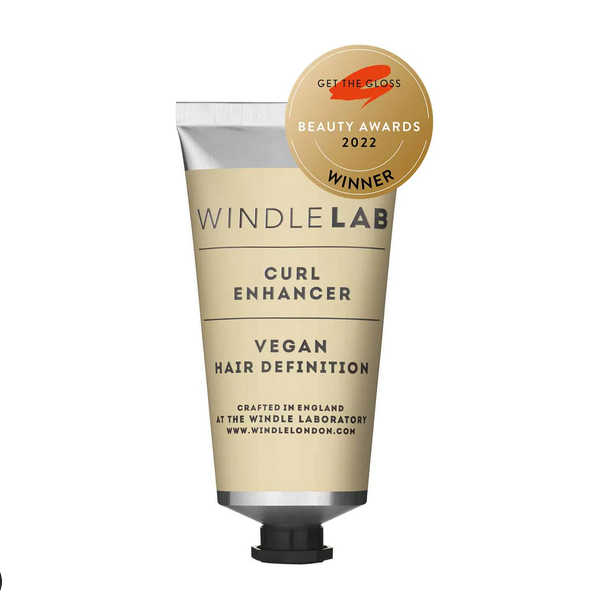
That is the space in which Windle LAB Curl Enhancer sits.
Windle London describes it as a styling cream designed to protect and perfect curly hair, with sugar beet extract and UV protection among the highlighted features. The product is also presented as suitable for different types of curly hair rather than being limited to one specific curl pattern.
But the more interesting question is not what the product claims to do.
It is what makes a curl product genuinely useful in everyday life.
Curly hair is rarely identical from one day to the next.
Humidity changes it.
Water changes it.
Sleep changes it.
The amount of product used changes it.
Even different sections of the same head can behave differently.
That makes curl styling considerably more complicated than simply applying something designed to “define curls.”
Definition is only one part of the equation.
Good curl styling should ideally preserve movement while helping the natural pattern become more visible and controlled.
The distinction matters because overly strong products can create a very specific look.
Curls may become highly defined but stiff.
The hair may hold its shape but lose softness.
The finish may photograph beautifully but feel unpleasant when touched.
For everyday styling, many people want something more relaxed.
They want their curls to look intentional without looking manufactured.
A cream-based product can make sense in this situation because it can be incorporated into the hair as part of the styling process rather than simply sprayed over the finished result.
The objective becomes supporting the curl rather than creating a shell around it.
This philosophy is increasingly relevant because natural texture has become an important part of modern hairdressing.
Professional stylists now spend more time learning how individual curl patterns behave rather than trying to make every client conform to a particular finish.
That means products also need to work with the hair.
A good curl routine begins with the condition of the hair itself.
If curls are dry, they may appear less defined even when the natural pattern is strong.
If the hair is weighed down by too much product, the curl can lose movement.
If the hair is brushed incorrectly, the pattern may become disrupted.
A styling cream cannot solve every one of these problems.
But the right product can become an important part of a wider routine.
Windle LAB Curl Enhancer is particularly interesting because the product is positioned around both styling and protection.
The brand highlights UV protection, which is useful because environmental exposure is an often-overlooked part of curly haircare. Curly hair can already have difficulty distributing natural oils evenly through its length because of the shape of the strand, and environmental stress can add another challenge.
Protection therefore becomes part of styling rather than an entirely separate concern.
That is a sensible direction for modern haircare.
The best routines increasingly combine appearance with long-term care.
Instead of asking only whether a product makes the hair look good immediately, people are beginning to ask whether it supports the condition of the hair over time.
This is particularly important for curls.
When curly hair is healthy, the natural pattern often becomes easier to work with.
The curls can appear more elastic and defined.
When the hair is excessively dry or damaged, the pattern can become unpredictable.
That means styling and hair health are closely connected.
It also explains why professional advice is so useful for curly hair.
There is no single curl routine that works for everyone.
Two people may both describe their hair as curly but have completely different needs.
One may have fine curls that become weighed down easily.
Another may have dense curls that require more conditioning.
Someone else may have a mixture of waves and curls with very different behaviour around the crown and ends.
The product choice therefore needs context.
Curl Enhancer should not be viewed as a universal answer to every curly hair concern.
It is better understood as a styling cream designed to help clients work with their existing curl pattern.
That distinction makes the product more credible.
The objective is not to create curls where there are none.
It is to help existing texture look more polished.
There is also something important about the word “enhancer.”
Enhancement suggests working with what already exists.
That is very different from control.
Control attempts to force the hair into a particular shape.
Enhancement supports the shape that is already there.
For modern curly hair styling, that difference is significant.
Natural texture is not perfectly uniform.
Some curls will be tighter.
Others will be looser.
There may be small areas of frizz.
The final result can still look beautiful without every strand behaving identically.
In fact, those variations often make curly hair look more natural.
This is where the styling technique becomes as important as the product itself.
Applying too much cream can weigh the hair down.
Applying too little may not provide enough definition.
The product needs to be distributed according to the density and texture of the hair.
This is another reason why professional hairdressers can be valuable educators.
A stylist can show someone how much product is appropriate, where it should be concentrated and how the hair should be dried afterwards.
Those lessons often make more difference than simply buying another product.
One of the strengths of a professional-led approach to haircare is that products are considered in the context of real hair.
A salon sees many different textures.
It sees what happens after repeated colouring, heat styling and environmental exposure.
It also sees which routines clients can realistically maintain at home.
That experience can influence product development in useful ways.
Windle London is an interesting example because its salon heritage and Windle LAB haircare collection sit closely together. The relationship between the salon environment and the products developed for home use is part of what makes the Windle London approach worth looking at more closely.
For someone considering Curl Enhancer, the most realistic expectation is therefore not that it will completely transform their hair.
The more useful expectation is that it can become a styling step that helps natural curls look more defined, polished and manageable.
That is enough.
Haircare does not always need dramatic claims to be effective.
Sometimes the most useful product is the one that makes a familiar routine easier.
Curly hair is particularly well suited to that philosophy.
The best results often come from understanding the texture, using appropriate products and allowing the hair to retain some of its natural character.
The finished look should still feel like the person wearing it.
Perhaps that is the strongest argument for a curl enhancer rather than a heavy-duty styling product.
It does not need to make the curls rigid.
It needs to help them behave.
And when the product, haircut, technique and condition of the hair are all working in the same direction, the result can be remarkably simple.
Defined curls.
Natural movement.
A softer finish.
Hair that looks styled without looking as though it has been overworked.
That is a very modern idea of curly hair.
Not controlling the texture. Understanding it.
Leave a Reply